Pages

Sunday, June 16, 2013

Superman Is Boring

So there's a new Superman movie, Man of Steel. It did very, very well in its opening weekend; so far it's at $125 million in box office. Which still leaves $100 million to go in order to match its $225 million budget, but it's a good start.

I don't go to very many movies, but even if I did, I'd probably be steering clear of this one myself. It's only getting 56% on Rotten Tomatoes, and even the positive reviews are rather qualified statements that could really be categorized either way. The general consensus appears to be that the actors all did what they were supposed to do in the technical sense, in that everyone performed competently and professionally, but nobody elevated the thing past its convoluted, brooding script and generic summer-blockbuster special effects.

All in all, another lackluster Superman movie. I'm not surprised. Superman isn't built for movies. In fact, he's not built for much serious storytelling at all these days. (Oh yes, we're going after him again.)

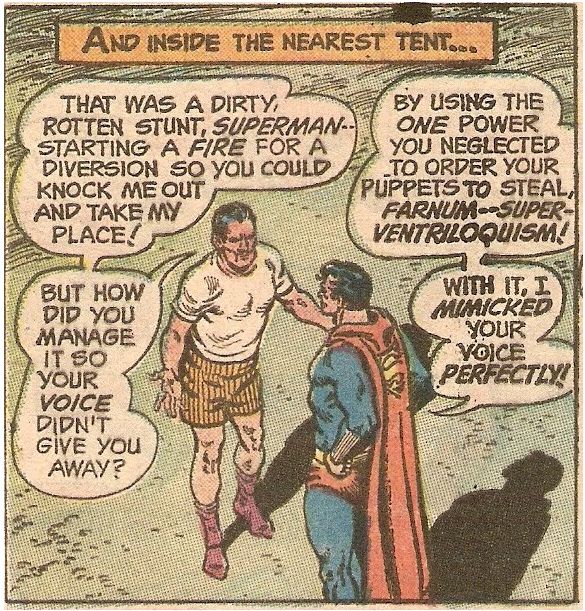
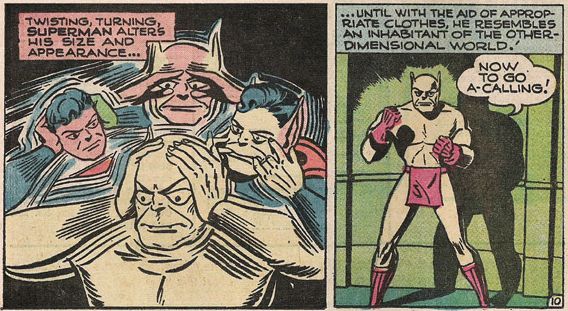
There's a reason for that, and Soren Bowie of Cracked noticed as well. When Superman's original appearance in Action Comics #1 happened, it was 1938. Back then, plotlines could be very simplistic and get away with it. The comic book as a medium was only about five years old at the time, with the first, Famous Funnies, having gotten underway in 1933. It was still the feeling-out period. All the avenues for superhero creation were open. The basic package of powers allotted to Superman wound up being a very easy and popular set to use: super-strength, flying, invulnerability. It today is known as the 'flying brick' package, with Superman's other major powers of super speed, heat vision, X-ray vision, super breath and super hearing tossed in as optionals. Of course, Superman hasn't just been stuck with that set. Different writers give superheroes different power loadouts as time goes on, and for a time Superman got decked out with all sorts of other powers. He got to do ventriloquism. He got to fly so fast he could make time go backwards in one of the movies. He got telekinesis. He got shape-shifting. He got super-hypnotism. He got super-weaving at one point. Super-friction. Super-landscaping and I am linking you to shots of the actual comic panels if you don't believe me. He got any power the writers wanted or needed him to have. Superman has so many superpowers you can't even keep track of them all.

In the 1930's, even in the 1950's and 60's and 70's, this was perfectly fine. You could get away with this. But sooner or later, you have a superhero who's so powerful that Earthly villains cease to be realistic opposition, Kryptonite or not. Once you've made someone that powerful, the usual solution is to ship them into space to fight galactic-level opponents. But Superman can't do that, because Superman's supposed to be Earth's big champion. You can't get him away from Earth on a permanent basis; you can only bring threats to him. Anything less than Darkseid showing up is effectively a Globetrotters game: you know Superman will win because it can't plausibly end any other way; the question is how is it going to happen.

So you need some other source of conflict. There's a problem there too, though: Superman is a total boy scout and nobody buys him any other way. He's the moral upstanding citizen everyone else looks up to. When the Death of Superman storyline took place in 1992, op-ed writers, unaware that DC Comics had every intention of bringing Superman back just like every other dead superhero, howled about how society apparently no longer had a place for Superman. In the days of the Comics Code Authority- the Hays Code of the comic book industry- every superhero acted more or less like that because nothing else was allowed. But while other heroes grew out of it, gained some sort of personal issue they could use for storylines, or at least restored one that existed before the Code, Superman never did. And he couldn't. The most anyone has really tried is giving him some sort of angst about his place in the world, but it's always been swiftly rejected. Superman knows his place. His place is being a hero.

As Kevin Smith noted in 2000 upon being handed a movie script for what would eventually become the 2006 movie Superman Returns,

"Batman is about angst; Superman is about hope. That was the thing that bothered me about Greg Poirier’s draft: they were trying to give Superman angst. They had Clark Kent going to a psychiatrist at one point. Superman’s angst is not that he doesn’t want to be Superman. If he has any, it’s that he can’t do it all; he can’t do enough and save everyone. It’s not enough to make him want to quit being Superman; it’s enough to make the guy stay up at night so he’s out doing shit constantly." 

(Smith would later leave the project not long after executives told him the script was to be little more than a vehicle to sell as much merchandise as possible. Don't bring the finished product up in his presence unless you want to see a head explode.)

As Soren Bowie pointed out in the Cracked link from earlier, that angst- the angst of not being able to save everyone- is probably the best hope for Superman to have an actual conflict that's a match for him. You can't be in Metropolis stopping a bank robbery and in, say, Africa trying to tamp down a civil war at the same time. Being super-fast doesn't mean you can be in two places at once. Nobody ever gave Superman a cloning power (even if they did give him a clone). So every time he's out saving someone, there's someone else he's not saving. But even that would prove extremely problematic... because solving those problems would require a lot of physical inaction. Talking. Debate. Legislative action. Judicial action. Charity work. All worthwhile... but not nearly as fun as punching a problem until it's fixed.

And even if pulled off, it can still backfire... because of the actual real-life societal problems that peskily refuse to go away. In 1993, the X-Men began a storyline regarding the 'Legacy Virus', a disease that infected and killed only superbeings. It was a thinly-disguised AIDS analogy, just like a lot of current-events issues that get taken on in the comic world. The thinking was probably that the Legacy Virus would get cured when AIDS did. Nine years later, the writers gave up and cured the Legacy Virus by making one mutant kill himself to cure everyone else. Colossus volunteered. (Colossus is, of course, no longer dead.)

Without that kind of conflict, though, there's not much left to give Superman enough of a challenge to be able to suspend disbelief. He is the perfect good guy who always wins. He's so powerful that it's questionable as to whether he even needs teammates anymore, because it's tough to think of anything the teammates could contribute other than removing Kryptonite. He is, to put it bluntly, a Mary Sue facing an audience that used to tolerate Mary Sues but no longer does. This is not to say there isn't a place for Superman. There's always a place for an incorruptible moral beacon.

But when that moral beacon is almost incomprehensibly powerful as well, he can be easily written into a corner. And that is Superman's true greatest weakness.

Friday, June 14, 2013

A Fish By Any Other Name Is More Appetizing

When you eat seafood, odds are you're going right for the big names: shrimp, tuna, salmon, cod, halibut, the like. The problem with that is there are only so many of those. Meanwhile, there are many fish with less attractive names, and many other fish called 'trash fish' that are simply thrown directly into the garbage upon being caught. Around here, we have wastebins for carp, our most famous resident invasive species. You catch a carp, you chuck it straight into the bin marked 'ROUGH FISH', and you keep on fishing.

The thing is, that's on you. If you ask the people doing the cooking in the restaurants, they'd love to be serving the less-popular fish. They'd love to serve the junk fish too. Whatever it is they can get you to eat. They deal with making fish into something tasty all the time. They know what's good. Michele Kayal of the Associated Press here goes into further detail about getting customers to eat the lesser fish- which can easily turn into popular fish.

They know it can be done. Lobster, after all, was not always a luxury food. It started out in colonial times as something you only ate when you absolutely had to and it was either that or starve. It was the era equivalent of ramen noodles. (Which, in turn, are also quite tasty when put in the hands of a pro.) This is an industry for which 'The Whole Beast' by Fergus Henderson- a book telling about how to cook every single part of a pig, from snout to tail to offal to the pig's blood- has become nigh-required reading. Done properly, no ingredient is off limits on taste alone.

And so it was that at last year's Taste Of Chicago- the world's biggest outdoor food festival- organizers arranged for carp to be cooked and handed out as free samples.

There is also the option, if all else fails, of taking a fish with an ugly name, giving it a prettier name, and putting it on the menu under the prettier name. You'll order Chilean sea bass. You're not ordering it under its other name, "Patagonian toothfish". Assuming that it even is Patagonian toothfish, which is not guaranteed. This particular route has a way of rankling the authorities, but it doesn't stop the restaurants.

After all, if you'd just eat your slimefish, they wouldn't have to call it orange roughy.

Thursday, June 13, 2013

A Moment For Reflection

Isn't it rather sad that a Supreme Court ruling that a human gene cannot, in fact, be patented by a corporation, and that the ruling was 9-0 to that effect, is being taken as big news or a landmark ruling or a surprise in any way, shape or form? Think about where we've gotten as a society that this becomes the sort of news that it is, that this becomes a cause for celebration as opposed to just another obvious ruling.

(Do note, though, that they did also rule that artificially-made genes can be patented, because they're, you know, artificially made. What they can't do is take a gene people get born with and go 'MINE'. Which, again... it's sad that that's actually news.)

Wednesday, June 12, 2013

I Will Turn This Ship Around Right Now

We're headed to Sporcle for a couple travel-itinerary quizzes. What I want you to do is retrace the steps of:

Captain Cook (6 minutes)
Charles Darwin, 2nd HMS Beagle voyage (4 minutes)
Christopher Columbus (4 minutes)
Queen Elizabeth II (10 minutes)
Lara Croft, main character of Tomb Raider (5 minutes)

You may want comfortable shoes.

Tuesday, June 11, 2013

You Made This Decision While Sober

I admit, I'm not a great designated driver. The thing is, I don't go into bars. I was designated driver once, for my brother Erik's bachelor party. I was the first to conk out for the night. The reason was that I can't handle cigarette smoke. At all. The plan was that Erik, me, and a couple of his friends would bar-hop around town over the course of the night. The first bar they picked was filled with smoke. There was a visible haze in the place. After half an hour, I needed to go outside for air. The second bar wasn't nearly as smoke-filled, but I was so out of it from the smoke of the first bar that, after a grand total of one hour, I had to go home and lie down for the rest of the night.

That's right, I wasn't even drinking and I still tapped out before anyone else in the group. (They walked the rest of the night and I believe they called a cab to get home.)

But I had two jobs that night. To drive everyone else around, and to not drink. I flunked out at driving, because, well, I had to take the car to get myself home to lie down. But I fulfilled my other job: to not drink.

In that respect, I appear to have outperformed some people. Let's first note that the study we're about to quote here, published in the Journal of Studies on Alcohol and Drugs, had a sample size of only about 1,100 people and that most of the subjects were students in an unnamed Southeastern college town. The college students will skew things high, but the Southeastern location, taken broadly, will actually skew things low depending on where exactly we're talking about (the north central, Big Sky region of the country, that's where things skew high). On the whole, we're probably talking a high skew. But given that sample set, they had 40% of designated drivers as having had a drink on their night to drive, and 20% of the drivers drinking enough to get themselves to at least a .05%.

However far the number overshot (or undershot) reality, though, what is beyond dispute is that this means the number is not zero, which is the entire point of having designated drivers in the first place.

The funny thing is that we're assuming people in the process of receiving a higher education to be MORE likely to be this particular brand of stupid.

Monday, June 10, 2013

Two-Lane High-Seaway

In the debate over where to build what would eventually become the Panama Canal, the decision came down to the route that was eventually taken, and another route that went through Nicaragua. The Nicaragua route was to make use of Lake Nicaragua, a path that would have right off the bat taken a lot of work out of the process. Panama was picked at least partially because France had previously attempted it, done part of the work, and then abandoned it. The United States just bought the French interests and picked up where they left off.

Not that this has stopped people from occasionally wanting to put a canal in Nicaragua anyway; doing so would cut hundreds of miles off a northern route (and remember how much of global commerce occurs north of Nicaragua). The Lake Nicaragua section has never been in dispute; the rest of the route has been altered from proposal to proposal. I mention this because the Nicaragua Canal proposal has been floated again. And just like in Panama, the canal is being floated by a burgeoning power flexing its muscles.

You shouldn't have to be told who that might be. (Hint: it's China.)

Sunday, June 9, 2013

Geography Class For People Who Shouldn't Need It


he South China Seas and East Indies is the most dangerous area with 293 accidents in the time period. The East Mediterranean and Black Sea, and the North Sea and British Isles, were two and three.

You ready for the chat, Gayathri? You ready for the chat we're going to have? Here comes the chattery.

Those aren't oceans, you dip.

Depending on who you ask, there are four or five oceans: the Pacific, Atlantic, Indian, Arctic, and perhaps the Southern Ocean (the sea surrounding Antarctica). None of the three listed areas are even parts of oceans- the South China Sea is to the west of the Philippines, with the Pacific to the east; the North Sea is to the east of the United Kingdom, with the Atlantic to the west; and the Mediterranean? Come on now. Seas are not oceans. Seas are smaller and more enclosed by land than oceans. In the case of the Mediterranean and Black Seas, completely enclosed. I would expect someone who writes for Discovery- the people who air Deadliest Catch, which takes place on a sea- to know this.

I suppose it could be worse. You could be the guy who took a dare to drink a bottle of soy sauce in some new, higher-level-of-stupid version of the tablespoon-of-cinnamon thing. But seriously, this chat shouldn't be happening.